
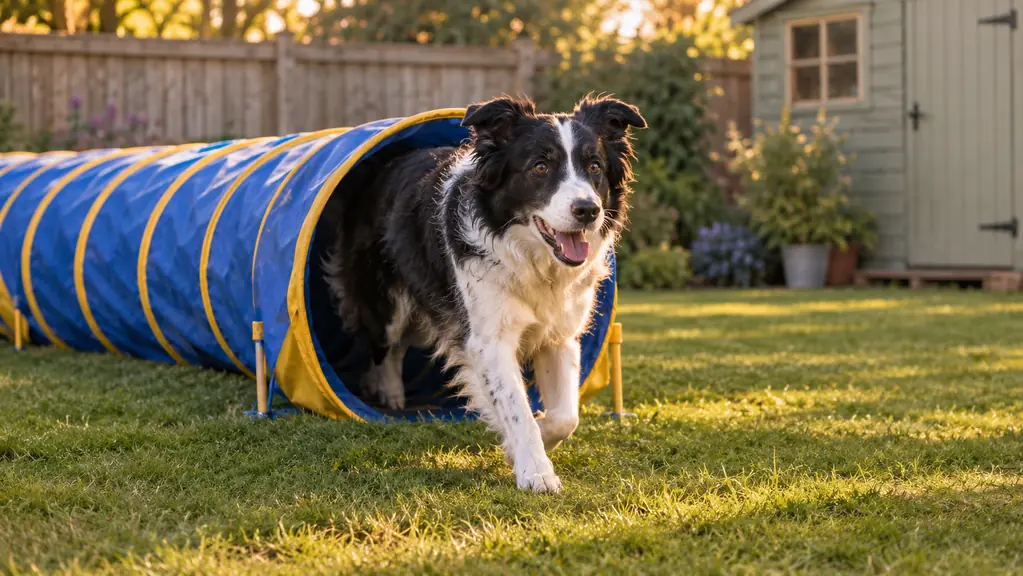
Here is the short answer. If the tunnel is going to sit on grass and take a dog running through it at speed, get the HDP 18 Ft Open Tunnel. If you are still finding out whether your dog will put her nose into a tunnel at all, a pop-up play tunnel does that job, folds flat, and lives behind a door. Those are two different jobs, which is why this comparison is not as one sided as I expected it to be when I sat down to write it.
I own the HDP tunnel. Eighteen months now, staked along the fence side of a 40 by 60 foot back yard, set out twice a week after the jumps and taken down after. I do not own a pop-up play tunnel. I handled one in a pet store and read a shelf of listings before writing this, and I want to be clear about which parts of this I know from use and which parts I know from looking. The HDP tunnel I can vouch for. The play tunnel I can only tell you what it is built to do.
| HDP 18 Ft Open Tunnel | Pop-Up Play Tunnel | |
|---|---|---|
| Length and shape | 18 feet of continuous open tunnel, 216 inches, that you can lay straight or pull into a gentle curve | A shorter tunnel that holds the shape it pops into |
| Staying put on grass | 2.4 pounds, so it moves when a dog hits it. Stakes through the grommets hold it | The one I handled had no stake points on it, so it rolls and slides on grass |
| Setup | About 5 minutes to walk out the curve and set the stakes | Seconds. It pops open and it is a tunnel |
| Takedown and storage | Back into the carry case on the shed shelf, and it has to dry over the fence first if the grass was wet | Folds into a flat disc that slides behind a door or under a car seat |
| Wet grass and mud | The cover picks up mud and grass and holds water after rain | Light enough to keep indoors, so it never has to meet wet grass |
| Room to run | 24 inch opening, wide enough for a dog going through at speed | Made for play, sized for a dog trotting through |
| A brand new or unsure dog | Squeeze it down to about 5 feet and the dog can see daylight at the far end | Whatever length it pops to is the length it stays |
| Indoors | 18 feet of tunnel indoors is most of a hallway | Fits a hallway, a living room, a rainy afternoon |
| Wear over time | Steel spring inside a Dacron cover, 18 months of twice weekly use, nothing torn | Built as a play tunnel, and it feels like one in the hand |
| Best for | Back yard drills and speed work | Testing the idea in a small space |
Where the HDP 18 Ft Open Tunnel Wins
Length is the whole thing. 216 inches of tunnel is enough to send a dog through at speed and enough to lay a curve along a fence line so the exit turns away from the entry instead of pointing straight back at it. When Juno was brand new to it I squeezed the whole thing down to about 5 feet so she could see daylight at the far end, and we worked back out over four sessions across two weeks. The second week was the one that mattered. She would go through the short version without hesitating and then stop halfway down the long one, so I would pull it in by about a foot, run her again, and pull it in a little more if she stopped a second time. By the fourth session she was running the full length, and I have not shortened it since. That adjustability is not something anyone advertised to me. It is just what a long open tunnel does when you push the ends together.
The mouth holds itself open. A steel spring runs the length of it and the Dacron cover is sewn around that spring, so the opening stays round at 24 inches and does not sag in the middle the way a plain fabric tube would. That matters more than it sounds. A tunnel that sags halfway along looks like a dead end to a dog who is not sure about the whole idea, and a dog who thinks she is running into a wall stops running. Mine has never sagged, even at full length with a curve pulled into it, and the spring has not gone soft in 18 months of being pushed down and pulled back out twice a week.
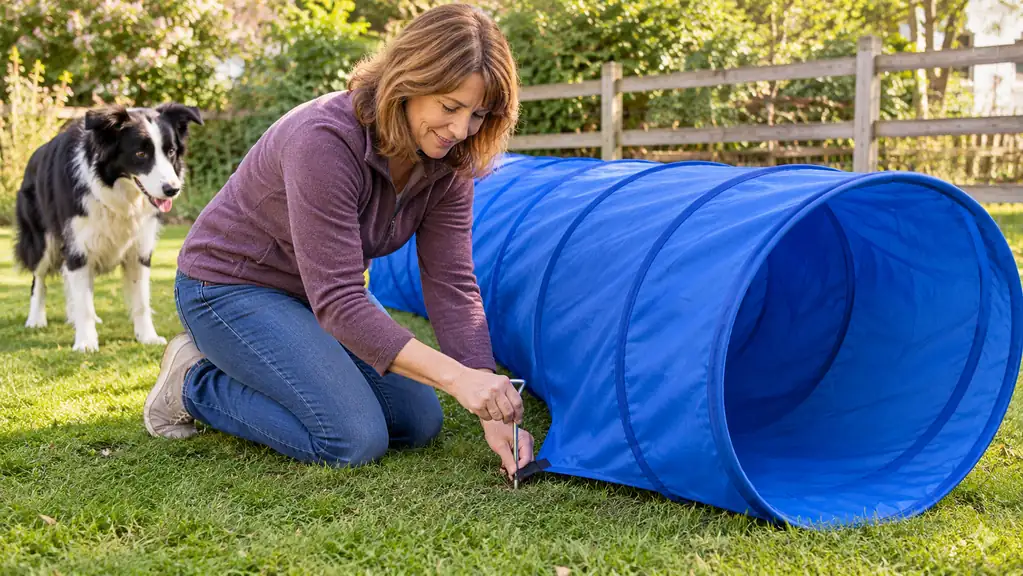
The second win is that it stays where I put it. At 2.4 pounds it is light, and a 28 pound dog hitting the side at speed moves it, which is why the stakes go through the grommets every single time. The tunnel came with 8 stakes, each one 7 inches long, and I use all of them, spaced along the lower edge on both sides. That is a two minute job and it is the difference between a tunnel and a tunnel shaped object that has rotated since the last run. Even fully staked, a hard hit shifts the line an inch or two and I straighten it before the next send. The play tunnel I handled in the store had no stake points at all. It was built to be picked up and carried, not pegged to a lawn.
Third, it has held up. Steel spring, Dacron cover, and after 18 months of twice weekly use there is nothing torn, nothing split at a seam, nothing that has made me think about replacing it. There is a scuff along the bottom where the grass and the ground have rubbed it, and small marks around the grommets where the stakes sit, and that is the whole of the damage. The cover is dirty and it has been dirty for a year now. Dirty is not the same as worn out.
Where a Pop-Up Play Tunnel Wins
Setup, and it is not close. A play tunnel pops open and it is a tunnel. My HDP takes about 5 minutes to walk out, curve and stake, and a few more minutes at the end to pull the stakes, shake the grass off and get it back in the case. When your whole session is 15 minutes long, five minutes of setup is a third of your training time, and that is before you count the drying. Mine are Tuesday and Thursday evenings and I have made my peace with that, because I would rather have the 18 feet. If I were squeezing tunnel work into ten minutes before dinner, I would not have.
Storage and indoor use are the other two. My tunnel goes back in its carry case on the shed shelf, and if the grass was damp it goes over the fence rail to dry first, because the cover holds water after rain and I am not packing it wet. A play tunnel folds into a flat disc. It goes behind a door, under a car seat, into a closet in a place with no shed and no yard. And indoors, 18 feet of tunnel is most of a hallway. A pop-up fits a hallway, or the strip of floor between a couch and a coffee table. If the goal is teaching a dog that a tunnel is a good place to be on a rainy afternoon in a small house, that is the tool for it, and no amount of staking or spring tension changes that.
The tunnel I would buy again for grass and speed
18 feet, 24 inch opening, a steel spring inside a Dacron cover, 2.4 pounds, and 8 stakes through the grommets so it stays where you laid it. Eighteen months of twice weekly use on mine and nothing has torn.
Amazon Check Today's Price on Amazon →What Living With the HDP Tunnel Is Actually Like
It takes up most of a small yard. My grass is about 40 by 60 feet, and the tunnel runs the fence side from the corner by the shed down toward the gate, which leaves the middle open for the jumps. On the weeks I set out both, the yard is a course and nothing else. I can still get to the shed, and Juno can still get to the back door, and that is the whole of the clearance I have. It is fine for a hobby. It would not be fine if I wanted the lawn for anything else on a Tuesday evening. The tunnel goes out, we work, it comes down. It has never been left out overnight.
The mud is real. The cover picks up grass and dirt and it does not wipe clean with a hand, so it gets a shake and a brush and that is as far as I go. After rain the thing holds water in the folds and has to hang over the fence before it can be packed away, which on a humid evening in Easley takes longer than I would like. This is the least interesting paragraph in this article and it is the one I would want to read before buying. Nobody tells you that the gear you buy for a dog sport is also laundry.
The 8 stakes are the difference between a tunnel and a tunnel shaped object that has rotated since the last run.
The routine is the same every session. Out of the case, walked out along the fence, curved so the exit turns away from the entry, then a stake through each grommet, then a walk down the length to check nothing is twisted. At the end, stakes out, a shake to shed the grass, and if the ground was damp it goes over the fence rail while I put the jumps away and refill the treat bag. It comes in when it is dry. That is 18 months of a small ritual and I do not mind it, but it is real time and a person should count it before buying.
Where it earns its keep is repetition. Juno runs it in a gentle curve at close to full length now, and the run is fast and clean and she comes out the far end looking for the tug. That is the whole point of the thing. It is not complicated equipment. It is a long open tube with a spring in it, it does exactly one job, and after 18 months I have no complaints about how it does that job.
How I Judged a Tunnel I Do Not Own
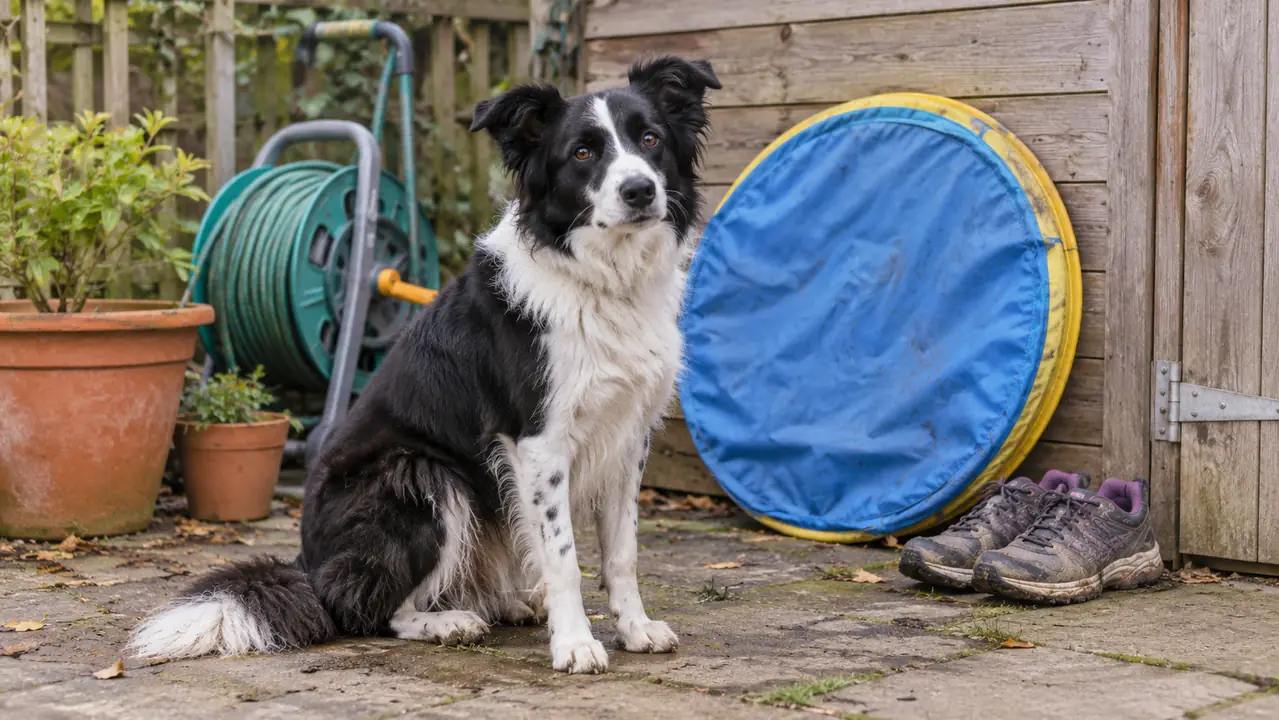
Fair disclosure. I have never owned a pop-up play tunnel and I am not going to pretend otherwise. I handled one in a pet store on a Saturday, opened and closed it a couple of times, looked at how the fabric was attached and whether there was anywhere to stake it down. Then I read listings, and I asked the woman behind the counter how often they get returned. She said rarely, and that most people buy one for a puppy and then buy something bigger later. That matches what I would expect, and it is also not a review. If you want a report from somebody who has lived with one for a year, this is not that report.
What I came away with is that they are honest products built for a different job. A play tunnel is for a dog to run through in a hallway, or for a kid and a dog to play with in the yard, or for finding out whether the whole idea of a tunnel makes your dog light up. Juno lit up the first time she saw the real one, and that is why I ended up buying it instead of a second cheap thing. The play tunnel is the question. The HDP tunnel is the answer to it, once you know the answer is yes.
What I Liked
- 18 feet of open tunnel, 216 inches, that you can lay straight or curve along a fence line
- 24 inch opening and a steel spring inside a Dacron cover that keeps the mouth from sagging
- 8 stakes of 7 inches through the grommets hold it on grass, which a 2.4 pound tunnel needs
- Squeezes down to about 5 feet for a dog that is new to the idea
- 18 months of twice weekly use and nothing torn
Where It Falls Short
- About 5 minutes to set out and pack away, every session
- Takes up most of a small yard at full length
- The cover picks up mud and grass and holds water after rain
- Has to dry over the fence before it goes back in the case
- No good indoors, 18 feet is most of a hallway
Who Should Buy Which
Buy the HDP tunnel if you have grass, a dog who already knows what a tunnel is or who took to one inside a couple of weeks, and a habit of training two or three times a week. Buy it if you are past the question of whether your dog likes tunnels and you want the piece of gear you will still be dragging out of the shed in two years. That was me 18 months ago and I would make the same buy again without thinking about it.
Buy the pop-up play tunnel if the question is still open. If your dog has never seen a tunnel, if you train in a hallway or a small yard, if you want to set something up in ten seconds and put it away in five, the play tunnel answers all of that. And if your dog ignores it, you have lost very little and you know something useful about what to try next. Buy the real one when the answer is yes. That is the order I would do it in if I were starting over.
Still the tunnel I would buy again: 18 feet, staked, nothing torn in 18 months
If your dog already runs a tunnel, this is the last one you will need to think about for a while. Full length for speed and curves, squeezed down for a beginner, and stakes through the grommets so it stays put on grass.
Amazon Check Today's Price on Amazon →