

Short answer first. If you are putting together a first training bag and you want one reward to carry in it, the Mammoth Pet Products Flossy Chews Rope Tug in the Small 15 inch size is the one I would buy again. I did buy it again. I am on my second one. The first frayed at the knots after about ten months of twice weekly sessions in the back yard, I threw it out, and I ordered the same thing that week. That is most of the review. The rest of this page is me explaining why the leather bite tug on the other side of this comparison still has a real job to do, just not in my yard.
Here is the short version. A rope tug is a play reward. You shake it out of a side pocket, hand it to your dog, tug for ten seconds, and put it back in your hand. A leather bite tug is a piece of equipment for teaching a dog to take a full mouth grip and hold it against real resistance. Those are two different jobs that happen to look similar in a photograph. I am Tessa Rourke. I am fifty two, I keep books part time in Easley, South Carolina, and I train a five year old border collie mix named Juno in a fenced back yard about forty by sixty feet with a slight slope. We meet a beginner group on Saturday mornings at nine on a field at the county fairgrounds. We have never entered a trial, I have no titles to show you, and I am not a trainer. I am a hobby handler with two sessions a week and a shed shelf full of gear.
One thing to be clear about before the table. Everything I own here I bought myself. The leather tug I have never owned. What I can tell you about it comes from reading listings and from watching handlers use them at the field, and I will say so every time it matters.
| Mammoth Pet Products Rope Tug | Leather Bite Tug | |
|---|---|---|
| Material | Cotton-poly yarn finished in three knots, 1.9 ounces | Leather |
| Size | Small, 15 inches, listed for dogs of 15 to 30 pounds | Varies by maker and is usually sold for bigger, harder pulling dogs, so a 28 pound dog sits at the small end |
| Grip for the dog | Juno grabs a knot, or the length between two knots | Built around a full mouth grip on the middle of the tug, which is the point of a bite tug |
| Holding up to a hard puller | Frays at the knots over months of sessions | Leather takes a hard pull without unravelling |
| Cleaning | Goes through the washing machine and dries on the line | Kept dry, wiped down, never machine washed |
| Living in a training bag | Rolls into a side pocket at 1.9 ounces | Bulkier, and it wants its own space |
| Handing it over as a reward | Out of the pocket, ten seconds of tug, back in the hand | Workable, but it is equipment rather than a pocket reward |
| Best for | A first reward tug for a beginner handler | Shaping grip and drive in a dog that pulls hard |
Where the Mammoth Pet Products Rope Tug Wins
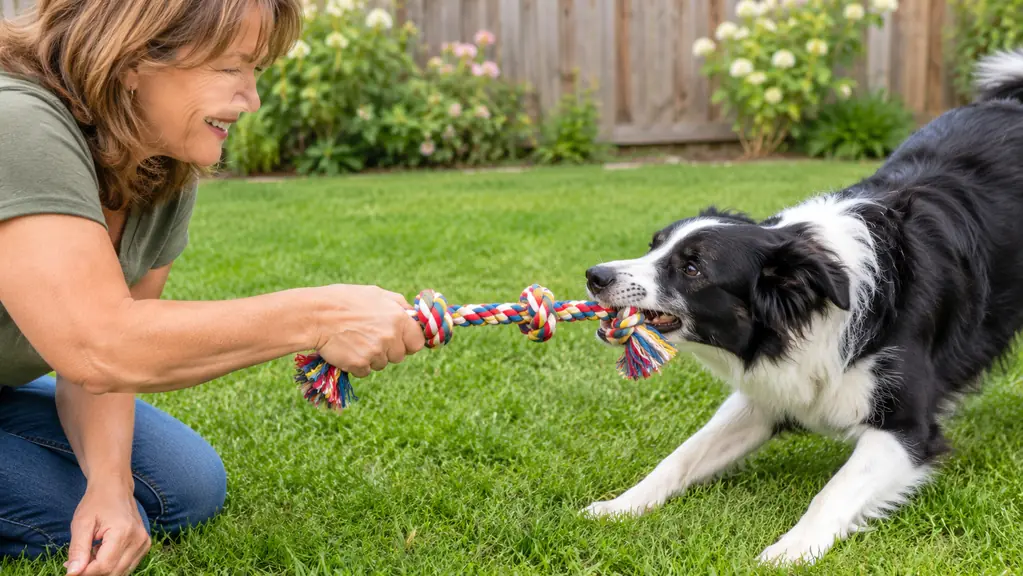
The plainest advantage is fit. The Small is 15 inches long and 2.5 inches across, and the listing puts it at 1.9 ounces for dogs of 15 to 30 pounds. Juno is 28 pounds and about 17 inches at the shoulder, so she sits at the top of that range and the size is right for her. I can hold an end knot in my fist and let her pull against it without her front feet leaving the grass. A 15 inch tug suits a dog in that weight range. It does not suit a much heavier dog, and the listing says so plainly.
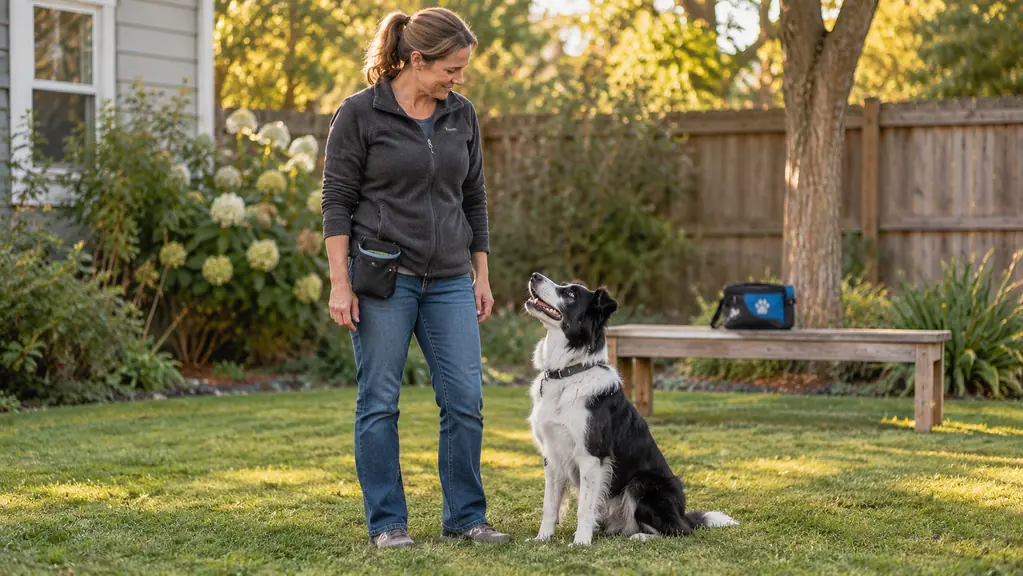
The second advantage is that it lives where I need it. Mine sits in the side pocket of my treat bag or in my hand, and it does not go anywhere else. At the end of a sequence it comes out, we tug for about ten seconds, and it goes back in my hand. That is the entire reward system. My timing as a beginner is bad enough without me digging through a bag for the reward, and the rope is the one item in the kit I never have to plan around. On club Saturdays the bag rides on my right hip with the belt pulled snug, the rope in the side pocket next to my keys, and I have never once had to walk back to the car for it. Fifteen minutes of handling goes better when nothing needs fetching.
The third is that it goes in the washing machine. My yard is grass with a slope and a garden shed by the back gate, and after rain it is mud, and a tug that gets dragged around out there comes back dirty. I wash it now and then and dry it on the line. The listing calls the material a cotton-poly blend, and I am not going to claim more than that for it. It comes out of the wash ready for the next session. The first one picked up a green stain across the middle from wet grass inside a month, and one wash took most of it out.
The honest weak spot is the fraying, and I am not going to bury it. The knots on my first one went fuzzy and then loose after about ten months of Tuesday and Thursday sessions, and I threw it out. The second one is on the same road. What I would say is that ten months of a dog pulling on a soft cotton-poly toy twice a week is a fair run, and I replaced it with the same tug rather than switching, which is the most honest thing I can tell you about how it held up.
The first one frayed at the knots after about ten months. I ordered the same tug again that week.
Where a Leather Bite Tug Wins
Durability goes to leather, and it is not close. Leather does not unravel into a fringe of yarn. A dog that throws its whole body into a pull will wear out a knotted cotton-poly rope at the knots, and I know that first hand because mine went. If you have a hard puller and you are tired of replacing soft tugs, leather answers that question in a way a rope cannot. Handlers at the field who work their dogs on a bite tug do not appear to be replacing them every season. The ones I have picked up at the field have softened with use rather than come apart, which is the opposite of what happens to yarn.
The second thing leather does better is grip. A bite tug is built around the bite. The dog takes the middle of it in its mouth and holds, which is exactly what you are shaping if you are working on a confident, full mouth grip. A knotted rope invites a grab at a knot or a catch at the loose end. For Juno, who grabs whatever is in front of her nose and gives it a cheerful shake, that is fine. For a handler teaching a dog to hold a grip against resistance, the rope is the wrong tool for the job. The first time I watched a handler work one at the field, the dog took the middle, planted its front feet and held while the handler leaned back slowly. No shaking, no catching a loose end. That is a different exercise from anything Juno and I do, and it needs a different object.
Where it loses for me is upkeep. Leather wants to be kept dry and looked after. It does not go in the washing machine with everything else, and it does not get pushed into a bag pocket and forgotten until Thursday. That matters when your kit lives on a shed shelf in South Carolina humidity. It is not a reason to avoid leather if you need what leather does. It is a reason not to buy it as your first reward tug.
The reward that comes out of a bag pocket and goes back in ten seconds
The Small 15 inch Flossy Chews Rope Tug is the size Juno uses at 28 pounds. If your dog is in the 15 to 30 pound range, that is the one I would start with.
Amazon Check Today's Price on Amazon →A Tuesday Session, Start to Finish
Tuesday and Thursday evenings, about fifteen minutes, never in the heat of the day. I set three jumps in a straight line with the rods on the 8.5 inch setting, which is the height I have used for over a year now. I tried the 13 inch setting a handful of times and went back down, because what I want is clean, easy repetition and not height. Then the tunnel comes out along the back fence, staked through the grommets, and Juno runs the sequence a few times. The tunnel takes about five minutes to stake out, and I have usually already walked her over the jumps twice to warm up, so setup plus warm up lands under ten minutes. That is the only reason a fifteen minute session makes sense on a work night.
Food comes from the treat bag. Play comes from the tug. When she finishes a run I pull the rope out of the pocket, we tug for about ten seconds, and it goes back in my hand. That split matters more than which tug you buy. The dog learns that the end of the run is the good part, and the reward is already in my hand before she lands the last jump. I keep the rope in my left hand while I reset a fallen rod with my right, and Juno waits, because she has learned the tug only appears once the run is finished.
Sizing Notes for a Small Dog
The Small is listed for dogs of 15 to 30 pounds, and it is 15 inches long, 2.5 inches across and 1.9 ounces. Juno is 28 pounds, so she is near the top of that range and the tug is right for her. If your dog is a good deal heavier than that, buy the bigger size. A soft tug that is too small for the mouth it is going into is not a shortcut, and it is the one mistake I see people make with rope toys. I measured her against the length once out of curiosity. Held at the end knot with my fist closed, about eleven inches hangs free, roughly the length of her head and neck together. When she pulls she pulls straight back and not up, and that keeps her feet on the grass.
Three knots give you three places to hold, and I use the end one. The middle of the tug is where Juno grips. That is the whole design, and at this size it works. It weighs so little that it does not swing when I pull it out of the bag, which sounds like nothing until you have caught your own dog in the face with a heavier toy by accident.
What I Would Tell a Beginner
Buy the rope first. It is the reward you can use tonight, in the yard, with no instruction, and it does not need a plan. If you get to the point where you are working on grip and drive, borrow a leather bite tug from someone at the club before you buy one, because the feel of it in a dog's mouth is the part you cannot learn from a listing. I have not needed to make that jump. Juno and I are still working on clean lines through three jumps and a tunnel, and the tug in my bag pocket is the right reward for that job.
Who Should Buy Which
Buy the Mammoth Pet Products rope tug if you are new to this, if your dog is in the 15 to 30 pound range, and if you want a reward that lives in a pocket and comes out in a second. Buy it if you want something you can wash and hang on the line. Do not buy it expecting it to last forever, because mine did not, and the knots are the part that goes.
Buy a leather bite tug if you have a hard puller, if you are working on grip and drive, and if you are far enough along that the tug is equipment rather than a pocket reward. Buy it if you will look after it. If you are in your first season with a dog like Juno, that is probably not where you are yet, and there is no shame in it. Most of us start with a rope.
Start with the one that fits a first training bag
Small 15 inch, listed for dogs of 15 to 30 pounds, a cotton-poly blend with three knots. It is the tug I replaced with the same tug.
Amazon Check Today's Price on Amazon →