
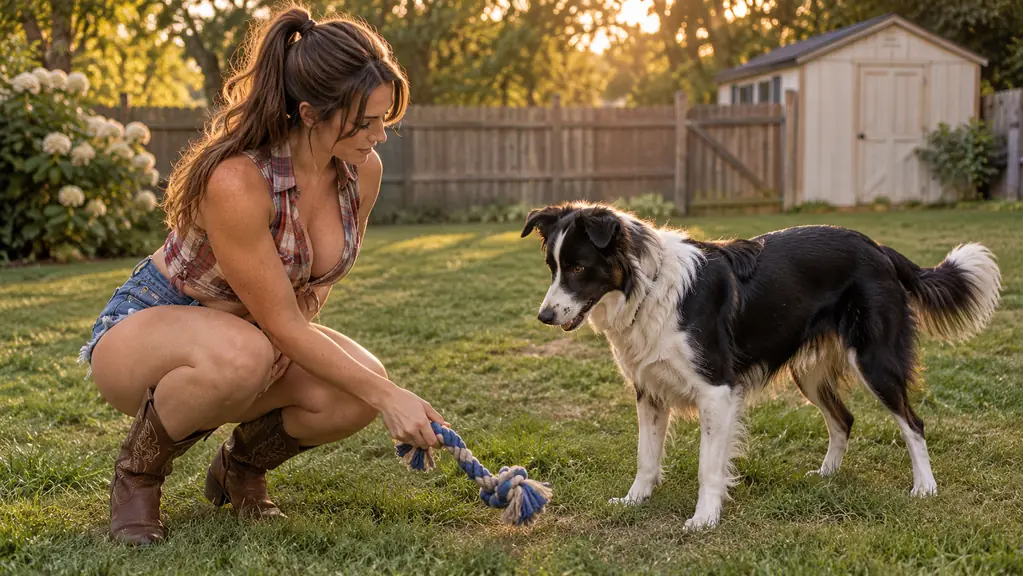
My training bag has four things in it: a handful of pea sized chicken treats, a fold of poop bags, my keys, and a knotted rope tug. The tug is the last thing I pick up before a session and the first thing that goes back in the pocket when we are done. Juno is a 28 pound border collie mix, five years old, and we train in a fenced back yard about 40 by 60 feet on Tuesday and Thursday evenings for roughly fifteen minutes. That is the whole operation. No trial entries, no championship plans, just a hobby handler and a dog who likes to work.
The tug is a Mammoth Pet Products Flossy Chews Color Rope Tug in the Small 15 inch size, three knots, listed for dogs from 15 to 30 pounds. I bought it 22 months ago in the same order as my treat bag. I am on my second one now, because the first frayed out at the knots after about ten months of steady use. Same model, same size, no upgrade. Here is why it keeps earning the spot.
The rope that ends every session on a win
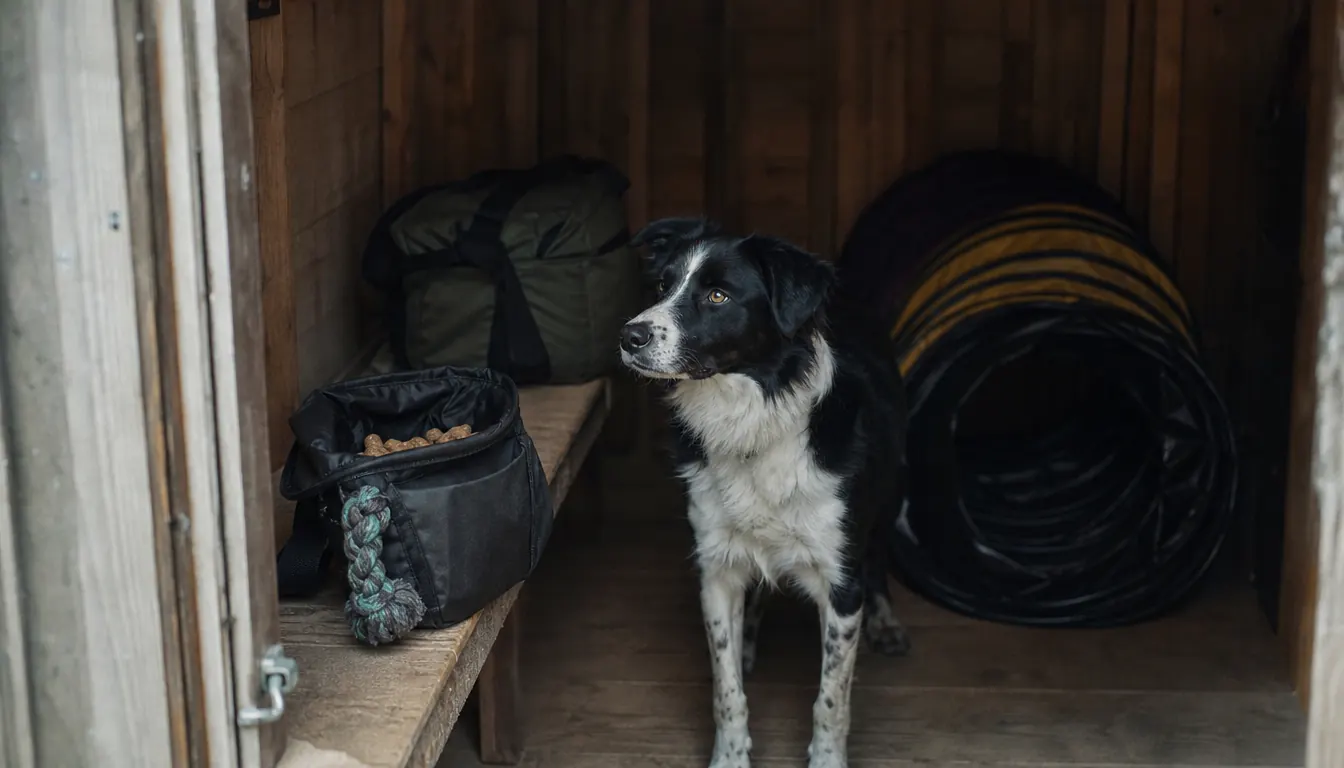
Fifteen inches, three knots, and it coils into the side pocket of a treat bag so it is always on your hip. It is the reward Juno will work for at the far end of the yard, and the one thing I never leave behind on the shed shelf by accident.
Amazon Check Today's Price on Amazon →It marks the end of a sequence, so Juno knows when the work is finished
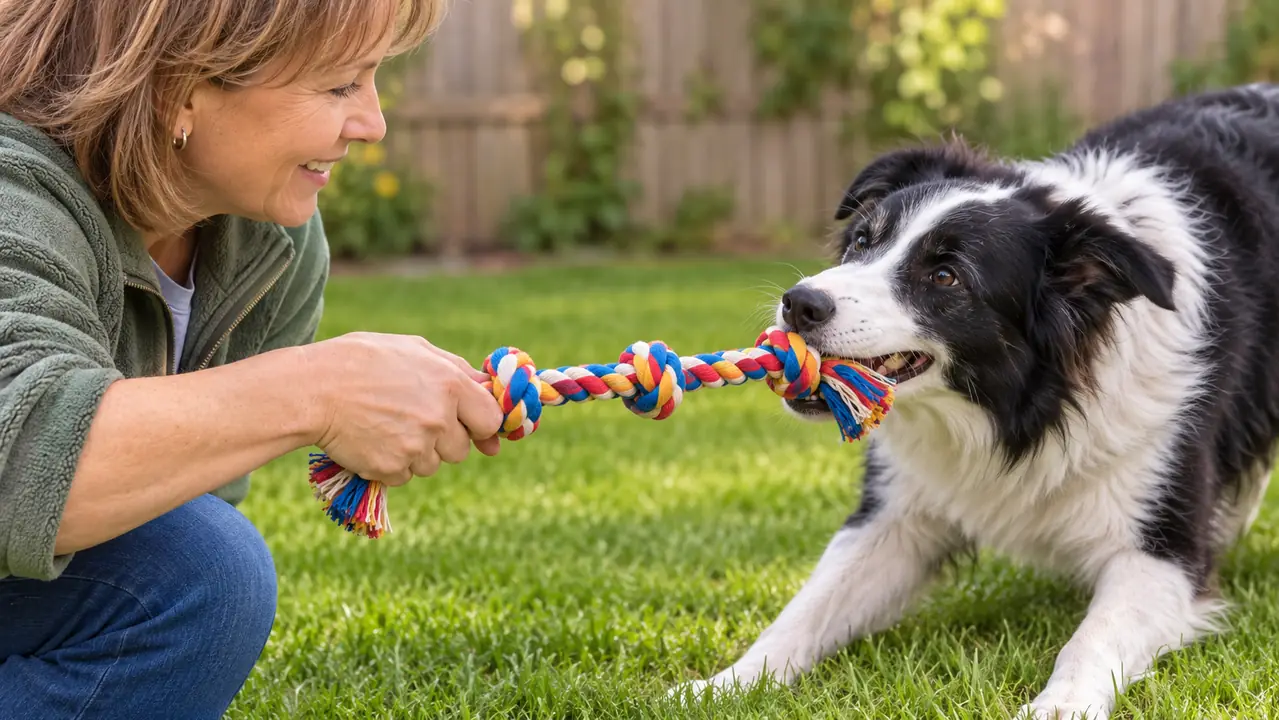
Every session in my yard runs the same way. Jumps first, tunnel second, then one short sequence of both. When the last obstacle is behind us I reach into the side pocket, pull out the tug, and we play for about ten seconds. That ten seconds is the signal. Juno does not have to guess whether we are done or whether another rep is coming, because the tug only appears at the end. She comes off the last obstacle looking for my hand, not for the gate.
Fifteen inches fits in the side pocket of a treat bag
A reward that lives in a pocket gets used. A reward that lives on a shed shelf gets forgotten. The 15 inch size coils into the side pocket of my OllyDog bag and rides on my right hip for the whole session, so I am never walking back across the yard mid sequence to fetch it. The length matters here. A longer tug would trail in the grass and catch under my feet, and a much shorter one would bring my knuckles up against Juno's teeth. Fifteen inches solves both.
Three knots give me three grip points that are not her end
The tug carries three knots along its length and I use all of them. I grip near the middle for a straight pull, nearer the end when I want to give a little slack, and on the far knot when I want to hold it still and let Juno do the pulling. Three grip points means I can change the feel of the game without changing the toy. It also keeps my hand well away from her mouth, which matters more with a fast dog than with a strong one.
It stays a play reward instead of becoming a chew
The tug comes out of the pocket, we play, and it goes back in my hand or the bag. It never gets left on the grass for Juno to work over on her own. That one rule is the reason a rope toy survives in this house. Left out, any rope gets picked apart at the knots, one strand at a time. Kept as a reward, it only takes the wear of tugging, which is a different kind of wear entirely. When it does fray, I know exactly why.
Tug reaches the far side of the yard when the treat bag does not
If Juno takes the tunnel and comes out at the back fence, I am 30 feet away with a bag of chicken on my hip. Calling her back for a treat works, but it turns the reward into a second recall. The tug lets me reward her where she already is. I walk to her, we tug for ten seconds, and the sequence ends right at the obstacle she just did. Nothing gets muddled, and she does not learn that finishing an obstacle means leaving it.
The knots make it easy to spot in grass
I have fumbled it more than once, usually while reaching for a treat at the same moment. A knotted rope sits up off the lawn instead of lying flat, so it is quick to spot and quick to scoop up. That sounds like a small thing until you have spent a minute on your knees in the back yard hunting for a toy while your dog stares at you in silence. The knots do the work.
It buys me a calmer minute before we walk back inside
Juno finishes a session with more energy than she started with, which is the opposite of what I expected from training. Ten seconds of tug takes the top off that energy. She gets to pull, I get to hold on, and we walk back to the house at normal speed instead of her bouncing at the end of the leash. I am not claiming it fixes anything. It is simply a better way to end an evening than dragging her in.
The Small size matches a 28 pound dog, and the listing says so
Mammoth Pet Products lists this as a Small 15 inch tug for dogs weighing 15 to 30 pounds. Juno sits at 28, near the top of that range, and it is the right size for her mouth and her pull. If your dog is heavier than 30 pounds, buy the bigger one, because this is not the toy for a 60 pound lab. I would rather say that plainly than have someone order the small and wonder why it feels light.
It goes through the washing machine and dries on the line
Grass, mud and dog spit all end up in the yarn, and my yard has a slope that holds water for a day after rain. The tug goes through the washing machine every few weeks and hangs on the line to dry. It has not come apart in the wash and it does not hold a smell. The cotton and poly yarn dries fast, so it is usually back in the side pocket the same afternoon. That is the entire maintenance routine.
Two years in, it is still the reward I reach for first
The first tug frayed at the knots and I threw it out about 12 months ago. I did not go looking for something better. I bought the same Mammoth Pet Products tug again, because by then it was the reward Juno would work for and I did not want to spend a month teaching her a new one. That is a boring endorsement and it is the honest one. The second one is still riding in the side pocket.
What I'd Skip
I looked hard at a leather bite tug when I was first buying. I never owned one, and I am judging it from listings and from watching handlers use them at the Saturday club field. For a hobby handler working alone in a back yard, leather is more toy than my job needs and it asks for more care than I want to give it. I also skip leaving any rope out as an all day chew, skip the long braided ropes that drag through wet grass, and skip buying two at once. One tug, kept in the pocket, does the job. When it frays out, I replace it with the same thing.
The tug only shows up at the end of a sequence, so Juno comes off the last obstacle looking for my hand.
One tug, one pocket, every session
Fifteen inches, three knots, sized for dogs from 15 to 30 pounds. It is the reward that ends every Tuesday and Thursday in my yard, and the one I would replace with the same model tomorrow.
Amazon Check Today's Price on Amazon →