
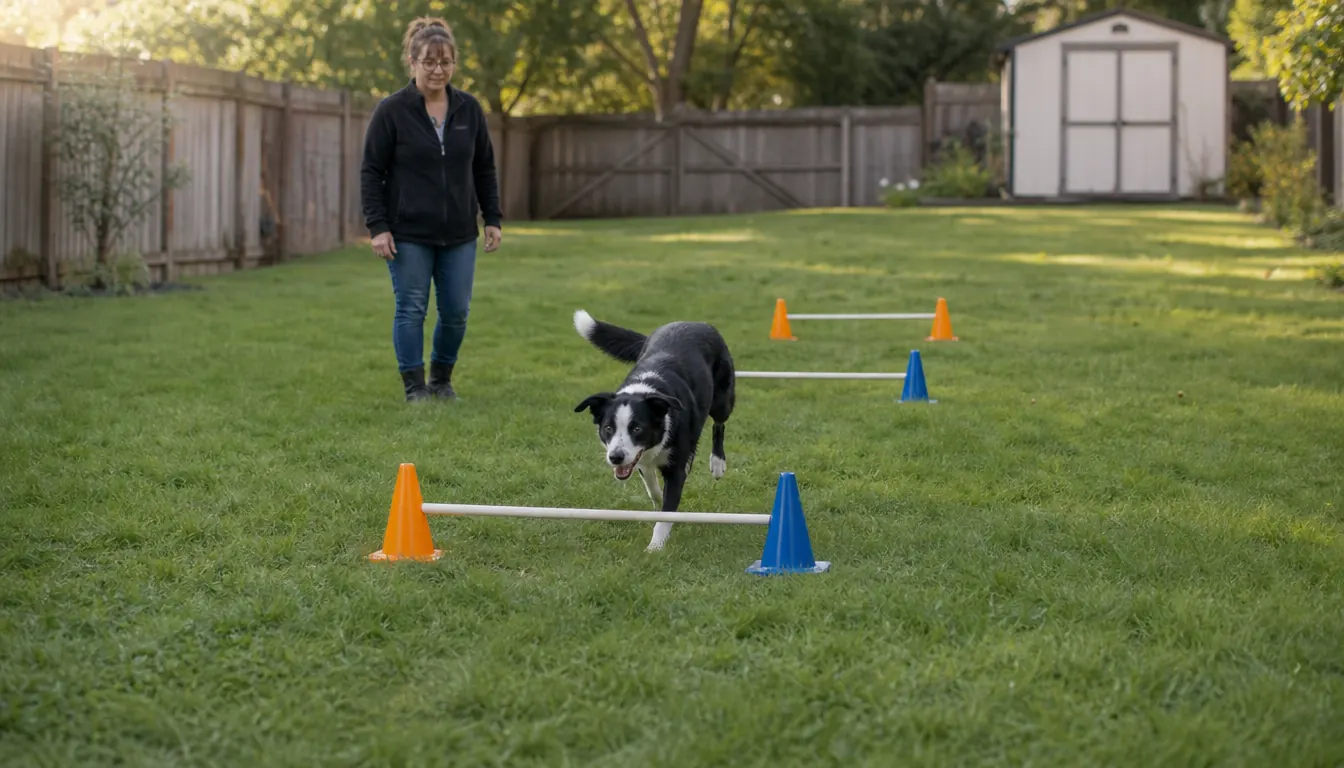
The first thing that goes wrong in a back yard session is almost never the obstacle. It is the treat. You ask for a behavior, the dog gives you something close to it, and then you spend four seconds digging in a jacket pocket, separating a piece of chicken from a receipt, and by the time your hand comes out the dog has wandered off to sniff the fence line. You did not pay for the behavior. You paid for the sniffing. That was my first two months. It stopped the week I moved the food out of my pocket and into an OllyDog Goodie Treat Bag on my belt.
I am Tessa Rourke. I am 52, I keep books part time in Easley, South Carolina, and I train a 5 year old border collie mix named Juno in my own back yard on Tuesday and Thursday evenings, about 15 minutes a session. On Saturdays at 9 we meet a beginner group on a field at the county fairgrounds. I am a hobby handler. I have never entered a trial and I am not a trainer. What I do have is 22 months of sessions behind me and one treat bag that has been on my right hip for nearly all of them. This is the routine I use to hand Juno a reward fast enough that she still knows what she did to earn it.
The pouch I buckle on before Juno even knows we are working
The OllyDog Goodie Treat Bag sits on an adjustable waist belt with a quick release buckle, opens with a magnetic closure that one hand can manage, and has two pockets so the treats and the rope tug stay apart. It holds enough for one full session. Mine has been on my hip twice a week for 22 months.
Amazon Check Today's Price on Amazon →Step 1: Put the Bag on Your Body, Not in Your Hand
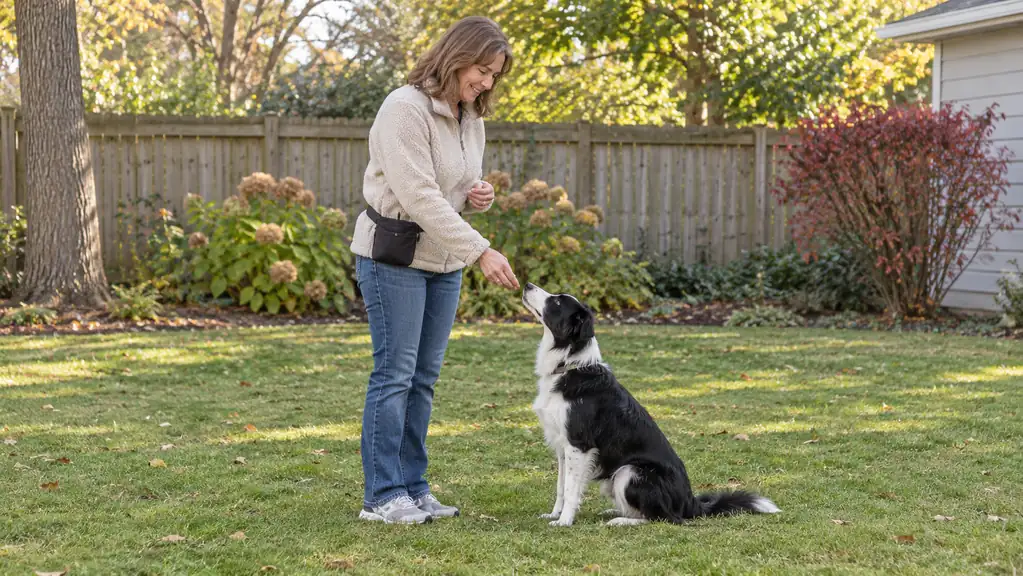
The bag goes on your body, not in your hand. If I am holding the pouch, I have no hand left for a leash, a bar, or a dog who has decided the tunnel is more interesting than me. The Goodie Treat Bag comes with an adjustable waist belt and a quick release buckle, so it goes on over whatever I am wearing and comes off with one hand at the end. I wear it on my right hip. The belt is listed at 52 inches and it adjusts with room to spare over a sweatshirt in winter. Buckle at the front, bag at the hip, rope tug in the side pocket. That is the whole setup and it takes about four seconds.
Before the bag, I used a jacket pocket for two months. It was slow, I fumbled the treats, and the pocket smelled of chicken by the second week. I stopped using it the day the bag arrived and I have not gone back. At the club field I put it on the same way I do at home, because the belt is the part that makes it work and the field is where the distractions are worse. If you are still reaching into a pocket, that reach is the delay. It is not the dog's fault, and no amount of repetitions fixes a pocket.
Step 2: Load It With Pea Size Treats and Load It for One Session
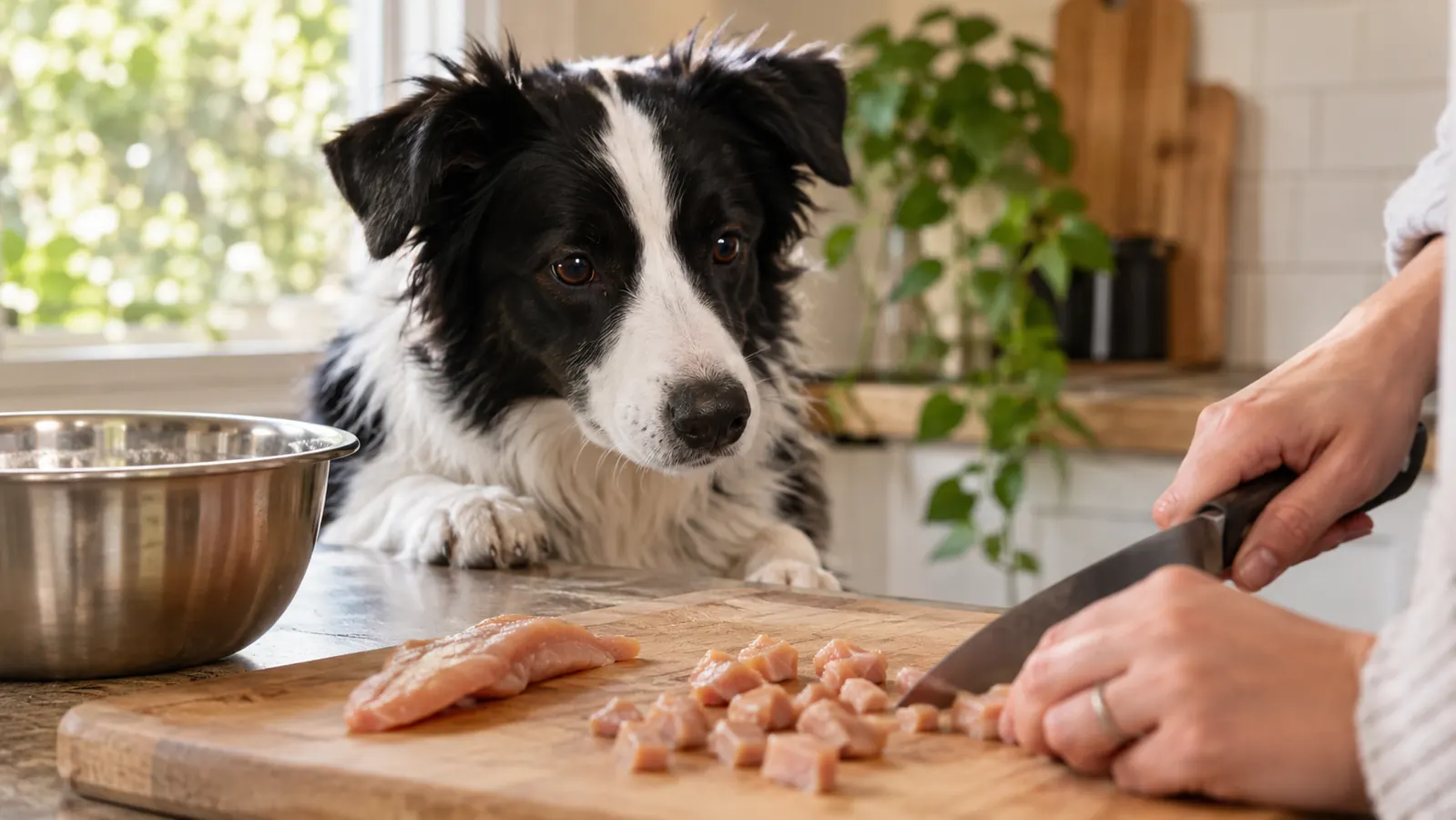
Juno is 28 pounds and she works for small soft chicken training treats cut down to about pea size. Bigger pieces cost me chewing time, and chewing time is dead time in a 15 minute session. The main pocket takes enough for one full session at home or one club morning, and I load it before I walk out the door, not while Juno is spinning in circles at the gate. The closure is magnetic, which matters more than it sounds. It opens with a thumb and drops shut when I let go, so I am not fighting a zipper with one hand while the other hand holds a leash.
The bag has two pockets and I keep them separate. Treats in the main pocket. The end of the rope tug, or my keys, in the side pocket. That way the tug is not sitting in chicken grease when I pick it up for a play reward, and my hand is not hunting past a knot to find a treat. One honest note: the bag is small. Two thirds full is where the magnetic closure sits flattest, and a bag crammed to the top does not snap shut as neatly. So I load it, use it, and top it up between reps instead of stuffing it once.
Step 3: Cut the Time Between the Behavior and the Treat
Speed is a mechanic, not an attitude. My right hand starts near the bag during a repetition instead of hanging at my side. When Juno does the thing, my thumb is already on the flap. The magnetic closure opens with one hand, I take one treat, and the closure shuts as my hand comes out. I do not look down at the bag. I do not dig for the best piece. One is the behavior, two is my hand at the bag, three is the treat at Juno's nose. On a good rep the whole thing is under two seconds and she is already turning back toward the jump for another turn.
What I got wrong at the start was stuffing three treats into my fist before each rep. Juno mugged my hand for the next ten minutes and stopped watching the obstacle. The other mistake was reaching across my body with my left hand, which put my arm between me and the dog and slowed everything down. Moving the bag to the right hip fixed the reach. If you are left handed, put it on the left hip. The belt adjusts, the bag is not handed, and the only thing that matters is that your paying hand does not have to travel.
A reward that lands three seconds late is not a reward for what you asked for. It is a reward for whatever the dog happened to be doing when your hand finally came out.
Step 4: Keep the Paying Hand and the Handling Hand Separate
At home in the back yard there is no leash, so both hands are free and this step is easy. At the club field it is not. I hold the leash in my left hand, low and loose, and the right hand does nothing but pay. Juno is about 17 inches at the shoulder and 28 pounds, so a leash held high enough to correct anything would be pulling her off her stride anyway. Low left hand, free right hand, bag on the right hip. When we are waiting our turn I rest my right hand on the bag and leave it there, so there is no wind up and no reach when the moment comes.
Keeping the bag on my body also keeps it out of the way. There is nothing swinging from my wrist when another dog goes past, and nothing for me to set down and forget on the grass. The quick release buckle means I can take the whole thing off between turns without unthreading anything. At a beginner group on a Saturday morning that is worth more than it sounds, because everybody is juggling a leash, a water bottle and a dog who wants to say hello to everyone.
Step 5: Reset the Bag at the End of Every Session
The session ends when I say it ends, and the bag gets emptied before I go inside. Leftover treats go back in the tub, because a soft treat that sits in a closed pouch overnight goes sticky and the inside of the bag starts to smell. I turn the main pocket out, wipe the inside with a damp cloth, and let it air dry on the shelf. The fabric is listed as water resistant and it is nylon made from recycled bottles, which means it wipes clean easily. I am not testing it in a rainstorm. I am wiping chicken grease off it once a week.
About once a month it gets a proper hand wash in the sink and dries on the line. I do not put it in the machine. It goes back on the shelf in the shed next to the rope tug, and the belt stays threaded so it is ready on Tuesday. Everything else has a home too. The tunnel dries over the fence before it goes in its case, the cones go in the carry bag, and nothing is left out overnight. That is not discipline. It is just that a bag with old treats in it is a bag I do not want to reach into.
What Else Helps
The bag only solves the delivery problem. It does not tell you when to deliver. The rule I use is to pay the try, not the perfect rep. If Juno offers the right direction and a decent effort, she gets paid at the moment she commits, not after I have decided whether it was good enough. Waiting to judge is the same as being late. The other thing that helped was giving the rope tug its own job. Food comes from the bag. Play comes from the tug, 10 seconds at the end of a sequence, then it goes back in my hand. Juno sorted that out in about a week.
Short sessions do more than long ones. Fifteen minutes on a Tuesday evening, ending while Juno still wants another turn, beats 40 minutes in the heat of the day. I also keep the games apart. The jumps get set on the grass in a line, the tunnel goes up after them, and the disc stays in the shed until Sunday morning because that is a different game entirely. If you are new to this, treat delivery is the first thing to fix and the obstacles are the last. A slow hand will flatten a fast dog, and my dog is faster than my hand was.
Two honest limits on the OllyDog bag. It is small. It holds a session, not a day out, so it is not the pouch I would take on a six hour hike. And the magnetic closure is happiest at about two thirds full. Those are small complaints about a bag that has been on my hip for 22 months, has been hand washed about twenty times, and still shuts with one hand while I am holding a leash in the other. If your treats live in a jacket pocket right now, the delay is the pocket.
The delay is usually the pocket, not the dog
The OllyDog Goodie Treat Bag is 4 1/4 by 5 1/4 by 3 inches, water resistant, with a magnetic closure, two pockets and an adjustable waist belt with a quick release buckle. Mine has been in the Tuesday and Thursday rotation for 22 months.
Amazon Check Today's Price on Amazon →