
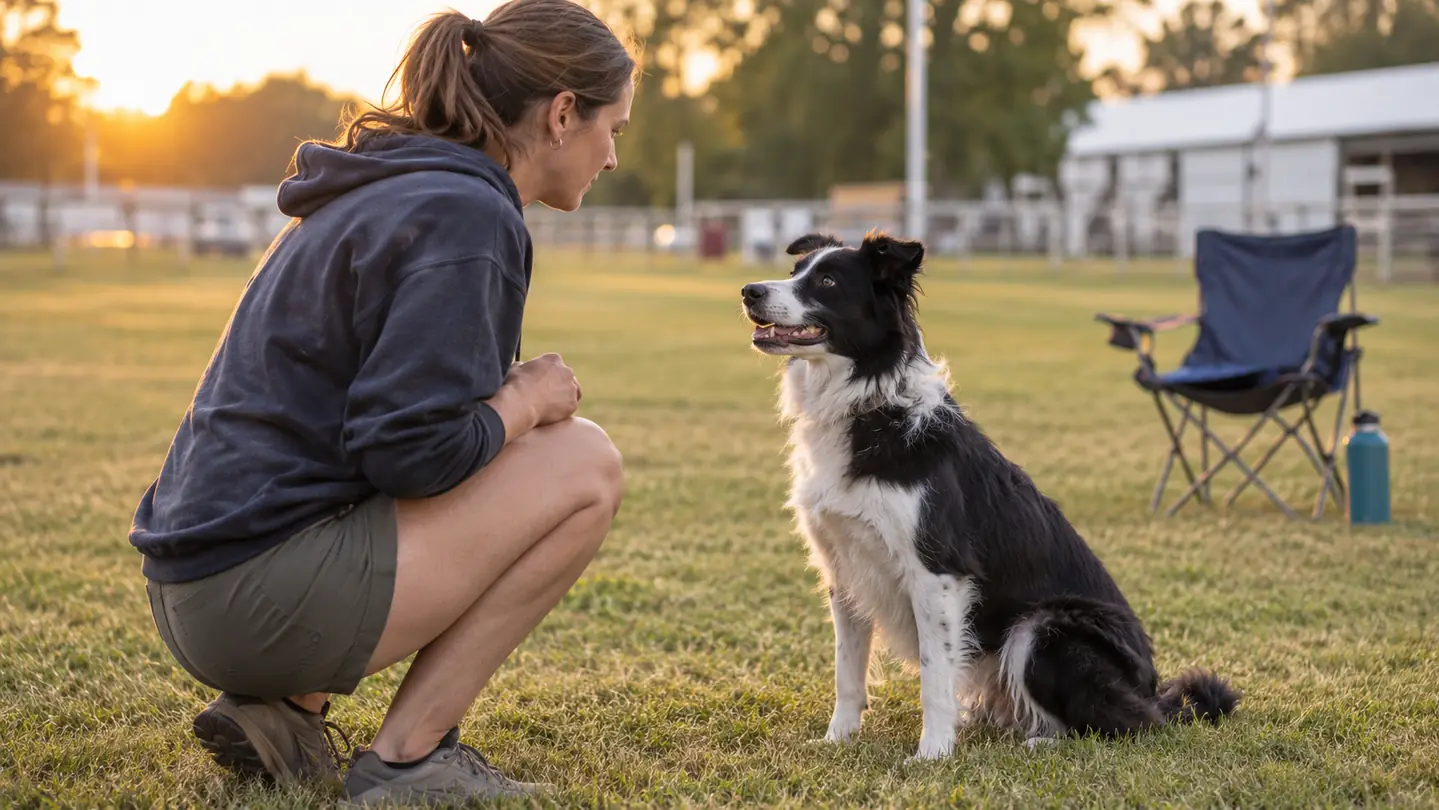
The first thing that goes wrong when you start agility in your own back yard is not the jumps. It is your pockets. I found that out the month I started, standing in wet grass with my border collie mix Juno staring at me and a fistful of chicken treats stuck to the lining of my jacket. She offered a sit, then a down, then a hopeful little spin, and I was still digging.
I am Tessa Rourke. I am 52, I do bookkeeping part time from a desk in Easley, South Carolina, and I train one dog. Juno is 5, female, 28 pounds, about 17 inches at the shoulder, and she came home from a shelter at a year old. We work Tuesday and Thursday evenings for about 15 minutes in the back yard, and Saturdays at 9am with a beginner group on a field at the county fairgrounds. I am not a trainer, we have never entered a trial, and I have no ribbons to show you. What I do have is 22 months of notes on one piece of gear: the OllyDog Goodie Treat Bag, bought with my own money, worn on my right hip for every session since.
The Quick Verdict
Small, light, and genuinely one handed. The bag that ended my fumbling, still on my hip 22 months later.
Amazon Check Today's Price →Two months of fumbling treats ended the day the belt went on
The Goodie Treat Bag sits on your hip, opens with one hand, and holds a full session of pea sized treats. Magnetic closure, two pockets, and a waist belt with a quick release buckle that stays where you put it.
Amazon Check Today's Price on Amazon →How I've Used It
The bag arrived 22 months ago in the same order as a Mammoth rope tug, and both are still in service. I wear it on the right hip with the included belt buckled, sitting just behind my hip bone where my hand falls without thinking. Small soft chicken treats, cut to pea size, go in the main pocket. The rope tug or my keys go in the side pocket. That is the whole system, and it has not changed in two years.
At the fairgrounds on Saturday mornings I wear it the same way. The club owns the full size equipment, including the weave poles and the contact obstacles, so I am not hauling anything but a leash and a water bottle. The bag holds enough treats for a full session, which for us is whatever the group is running that morning. I fill it once in the parking lot before we walk over and I do not think about it again.
At home I fill it before we start. Juno works for about 15 minutes, we take a break, and I have never run it empty in a home session. On club mornings I have come close, usually when the group runs long, and that is a note about the size rather than a complaint.
The listing says three ways to wear it. I have used one. The waist belt is what I bought it for, because I wanted my hands free for a leash, a tug, or a treat, and I did not want to think about where the bag was. It has never swung around to the front or bounced into my leg, which is more than I can say for the jacket pocket routine.
What the Magnetic Closure Actually Changes
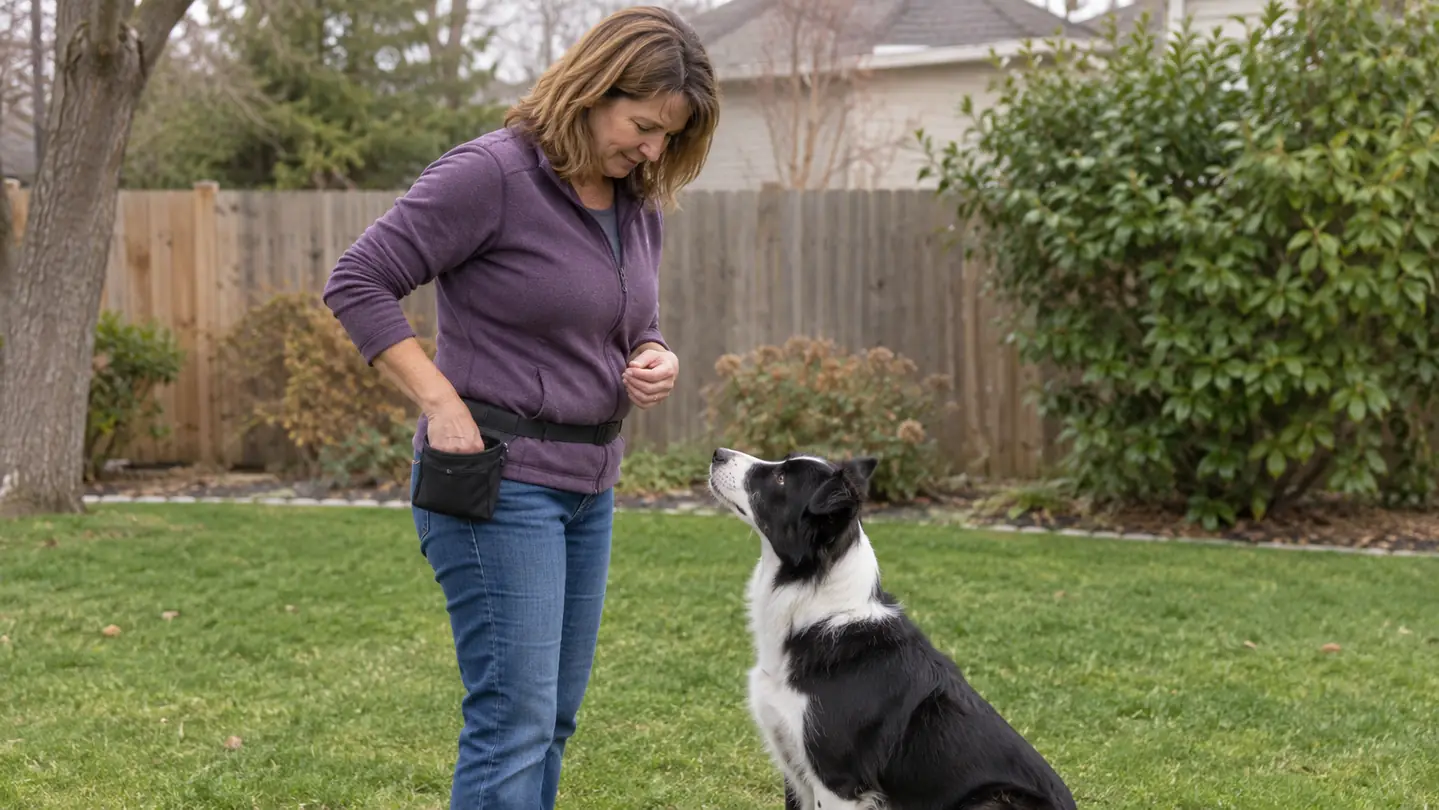
A jacket pocket has no shape and no closure. You reach in, you root around, and by the time you find a treat Juno has offered the behavior twice and quietly given up on the idea that it pays. The magnetic closure on the OllyDog bag is the part that makes one hand enough. I thumb the top open, take two pea sized treats, and it closes again without me looking down.
That sounds like a small thing written out like that. In the yard it is the difference between rewarding the rep I wanted and rewarding the rep that happened three seconds later. Juno is a border collie mix, which means she is quick to notice which one I actually rewarded. Slow hands taught her to offer the wrong thing.
The one place the magnet asks something of you is a full bag. Stuffed to the top, it does not close as neatly, and the top sits a little proud of the treats inside. I fill it to about three quarters now. If you like to cram a pouch to the brim and shake it, this one will ask you not to.
What I have not missed is the sound. A pouch with a hard fastener announces that a reward is coming from across the yard, and a clever dog learns to work for the sound instead of the job. This one opens quietly, which means the only thing Juno hears is me saying yes.
Two Pockets, and What Goes in Each
The main pocket is the treat pocket. I use small soft chicken training treats cut down to about the size of a pea. Bigger pieces mean Juno stops to chew and the session loses its rhythm, so the cut matters more than the bag does.
The side pocket is the one that surprised me. On sequence days the Mammoth rope tug rides there, and that is the difference between a reward I can produce in one second and a reward sitting on the shed shelf 30 feet away. On work days my keys go in it instead, so I am not patting down three pockets in the driveway before I can leave.
The bag measures about 4¼ by 5¼ by 3 inches and weighs a little over three ounces on the listing. It is small enough that I forget it is on until my hand drops and finds it. That same size is why I would not take it on a long day out. For a hike or an afternoon at a friend's place, this is a snack, not a supply.
Two pockets sounds like a small feature. What it actually does is separate food from play, which matters more than I expected. The tug stays clean and dry in its own pocket, the treats stay where I can reach them, and I am not fishing a slobbery rope out of the same space as Juno's chicken.
The Jacket Pocket I Used Before
For the two months before this bag arrived, my treats lived in my jacket pocket. It was slow. The treats went soft and greasy in the lining, I fumbled them at the exact moment I needed to be quick, and by the end of a week the pocket smelled of chicken in a way that does not wash out. I stopped using it the day the bag arrived.
I have not owned a belt pouch with a liner, and I have not owned one that clips to a waistband, so I cannot tell you how the OllyDog bag stacks up against those. I can tell you that going from a pocket to a bag on a belt was the biggest change in how fast I could reward, and it did not tie up the hand that holds the leash.
If you are still in the jacket pocket stage, the honest test is simple. Count the seconds between the rep you liked and the treat in Juno's mouth. If that number is bigger than one, the pocket is costing you reps and the fix is not a better pocket.
Twenty-Two Months In
I hand wash the OllyDog bag about once a month in the kitchen sink with a little dish soap and let it air dry overnight. The fabric is water resistant and, per the listing, made from three recycled plastic bottles. It has not torn, cracked, or gone limp where the belt rubs. Nothing on it has broken.
The buckle is the part I expected to fail first, since a quick release buckle on a belt gets used every single session. It has not failed. It still clicks, the strap still holds its adjustment, and I have never had to rethread it mid session. The listing carries a lifetime warranty. I have not needed it, so I cannot tell you how that side of the company behaves.
The outside fabric has smoothed where my hand goes in and out, and the magnet is a touch less crisp than it was on day one. Both read as 22 months of twice weekly use plus Saturday club, not as defects. I have not been gentle with it and it has not asked me to be.
The belt itself has held its shape, and the bag still sits where I put it at the start of a session. I have washed it, dried it, stuffed it, dropped it on the grass, and hung it on the shed shelf by the strap more times than I can count. For a piece of gear this small, that is the whole test.
The Fabric, the Washing, and the Shed Shelf
Water resistant is the claim on the listing, and my experience matches it. Dew on the grass beads up and wipes off. A splash from the water bottle is not a problem. I would not leave it out in a downpour, but I would not leave any of my gear out in a downpour.
The recycled fabric detail is the sort of thing I would normally skip past. Three plastic bottles per bag is not going to change the world, and I am not going to pretend it does. It is a nice thing to know, and the fabric has been tough enough that I have no complaints about how it wears.
Between sessions it hangs on a hook on the shed shelf next to the rope tug and the jump bag. That is where it lives, and that is why I have never lost it. The bag is the one thing I do not have to think about, which is exactly what I want from gear this small.
Where It Falls Short
Size is the first thing. It holds a session, not a day. The second is that full bag closure I mentioned, which is a design trade rather than a flaw. The third is the belt. The strap is listed at 52 inches, which is plenty for me, but if you plan to wear it over a heavy winter coat, or you are a bigger person than I am, measure before you count on it. That is a fit note, not a knock.
I would also not hand this to someone who trains several dogs in a row. One dog, one session, one fill is where it shines. Two or three dogs back to back and you will be refilling in the middle, which is fine but not the point of a belt bag.
There is also no way to make it bigger, which is the trade you make for a bag that stays out of the way. If I need more treats I fill a second time, and if I need more than that I am probably training longer than a 5 year old border collie mix needs to work.
None of that made me stop wearing it. It is the piece of kit I reach for first on a Tuesday, ahead of the jumps, ahead of the tunnel, ahead of the tug. The bag is not the interesting part of agility. It is the part that gets out of the way so the interesting part can happen.
What I Liked
- Magnetic closure is genuinely one handed
- Two pockets keep treats and the tug separate
- Waist belt with a quick release buckle stays put through a session
- Small and light enough that you forget it is on
- Water resistant fabric that has survived 22 months of monthly washing
Where It Falls Short
- Too small for a long day out
- Does not close as neatly when packed full
- Belt is listed at 52 inches, so check the fit over winter layers
Twenty-two months on my right hip and the only thing that has failed is my habit of stuffing it too full.
Who This Is For
This is for the handler who trains in the back yard two or three times a week and wants the reward to arrive on time. If your treats are in a pocket and you keep losing a second to the search, the bag fixes that specific problem, and it fixes it on the first session. It is the least dramatic gear purchase I have made and the one I would replace first if it went missing.
It is also for the club beginner. Ours meets Saturdays at 9am and the club owns the equipment, so all I carry is a leash, a bottle, and this bag. It has been enough for every session I have done there.
And it is for the person who wants one thing that works without a routine. I do not charge it, pair it, or maintain it beyond a monthly wash. I fill it, buckle it, and train.
Who Should Skip It
Skip it if you need a day bag. A full afternoon out, a hike, a long class with several dogs, all of that wants more capacity than this. Skip it too if you like a pouch that closes solidly no matter how much you cram in.
And skip it if you have not measured the belt. The strap is listed at 52 inches. Mine fits over a t shirt and a light jacket. I would not promise it over a winter coat, and I would not talk you into it if the numbers do not work.
Finally, skip it if you are looking at this to fix your handling. It will not. It makes the reward quicker, and quicker rewards make my timing easier to see, but I still make the same mistakes I made two years ago. The bag holds treats. It does not hold a training plan.
If your treats are still in your pocket, you are losing reps
Magnetic closure, two pockets, an adjustable waist belt with a quick release buckle, and 22 months of twice weekly use behind my opinion. Fill it once before a session and keep both hands for the dog.
Amazon Check Today's Price on Amazon →