
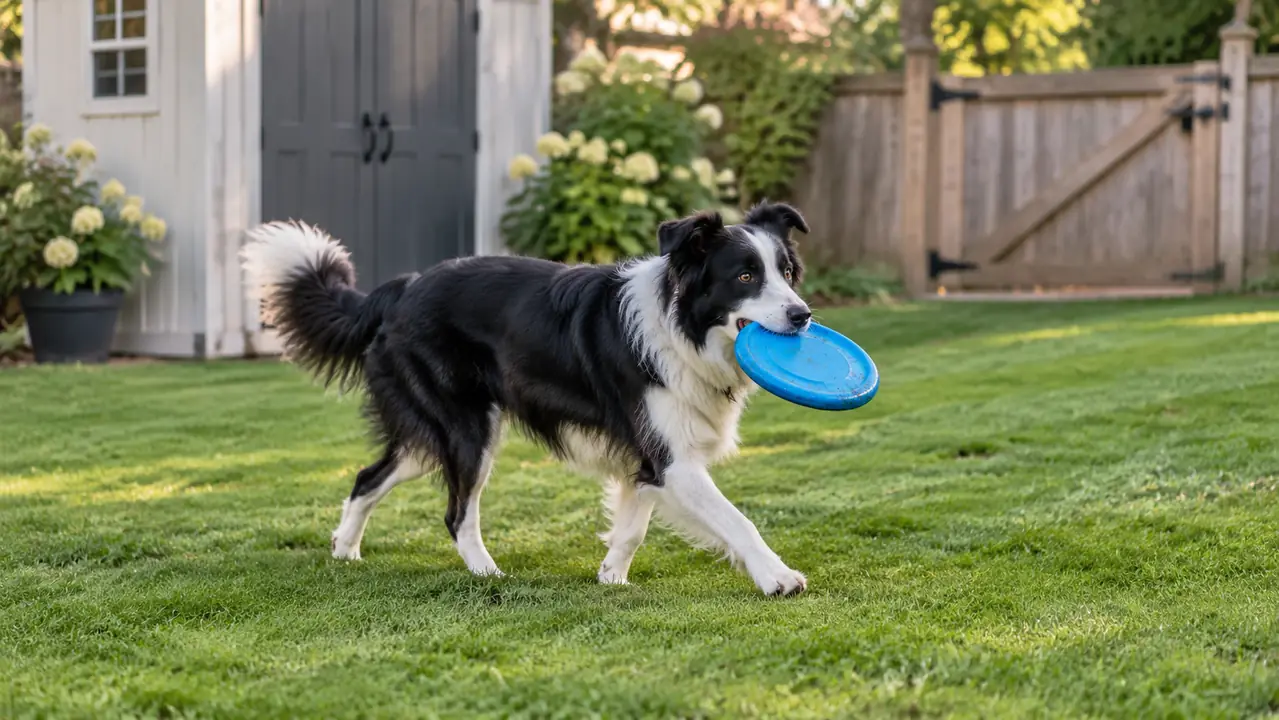
The first time I threw the Chuckit! Paraflight across my back yard, Juno watched it land, looked back at me, and sat down. That was about twelve months ago, on a Sunday morning, with the grass still wet from the night before. She was four then. She had never chased a disc in her life, and I had never owned one.
So this is not a review from a trainer, and I am not going to dress it up as one. I am a part time bookkeeper in Easley, South Carolina, and I took up agility two years ago as a hobby with Juno, a border collie mix who came home from a shelter at about a year old. We do jumps and then a tunnel on Tuesday and Thursday evenings for roughly fifteen minutes. The disc is a separate thing entirely. It is a Sunday morning game, kept well away from the equipment sessions, and that has never changed.
The Quick Verdict
A soft edged disc that flies straight on a low, flat throw and came through a full year of Sunday mornings. The Large is simply more disc than a 28 pound dog needs.
Amazon Check Today's Price →A disc that a ball ignoring dog will actually run for
Soft rubber edges, a multilayer nylon interior, and a 9.75 inch span. It has sat on my shed shelf for a year and it still flies flat.
Amazon Check Today's Price on Amazon →How I've Used It
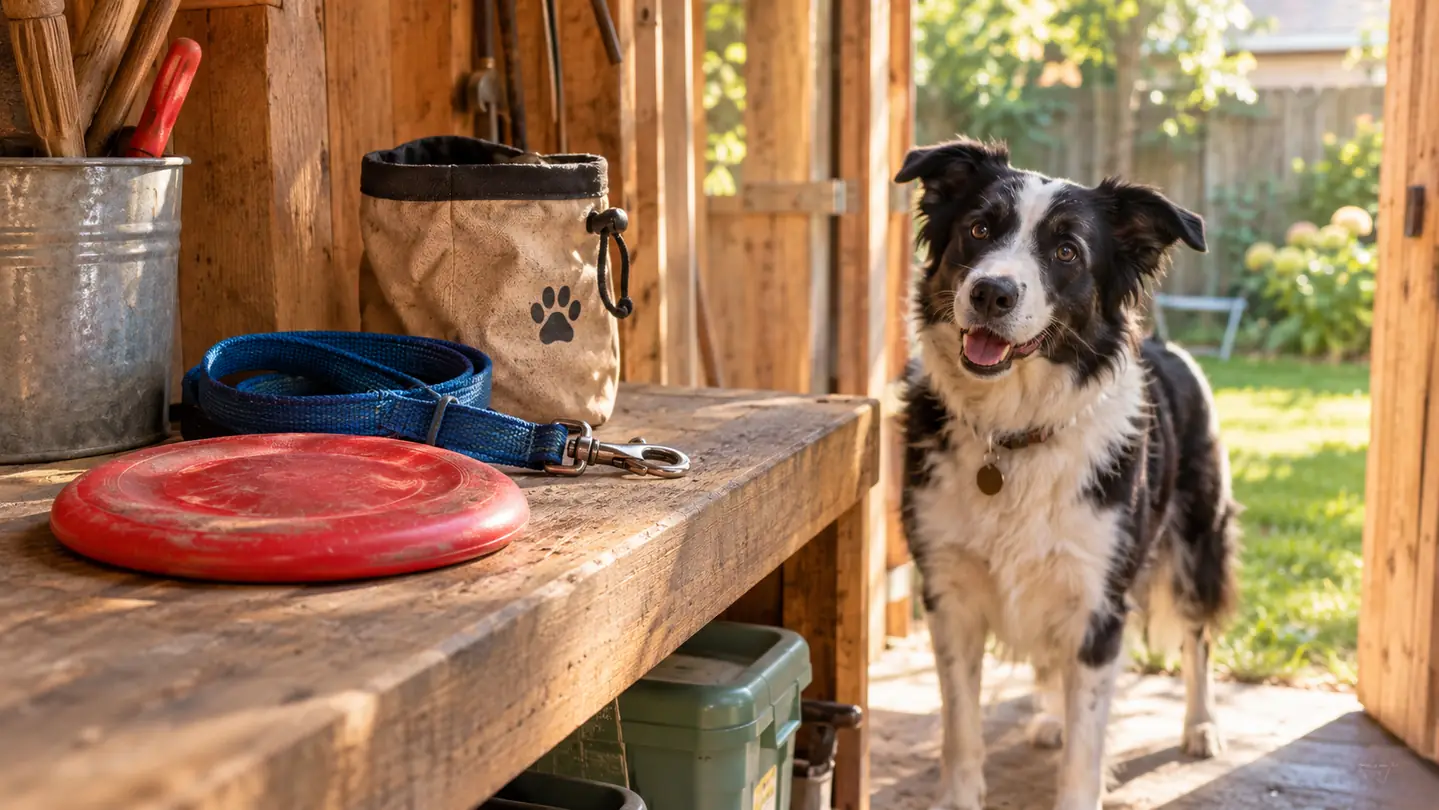
Our routine is boring and it works. Sunday morning, after Juno's walk and after I have had coffee, I take the disc off the shed shelf and we go out into the grass. I throw it maybe fifteen or twenty times and then we stop. Fifteen minutes is about the length of everything I do with her, and I have never found a good reason to stretch it. I bought this Chuckit! disc myself, the same way I bought the jumps and the tunnel before it, so nothing here came to me free in exchange for a kind word.
I stand near the shed and throw toward the slope at the far end of the yard, which is about forty by sixty feet of fenced grass with a garden shed by the back gate. Juno runs out, picks the disc up, and brings it back most of the way before she drops it and waits for me to come get it. We are not working on a formal retrieve. We are playing, and I stopped apologizing for that about a year ago.
Nothing about our game looks like the videos you see online. I throw low and flat. I do not ask for high catches and I never have. The disc has also never once been part of a Tuesday or Thursday session. Those evenings belong to the jumps and then the tunnel, and the disc stays on its shelf. That separation is deliberate, and I think it is part of why she still trots out to the yard when she sees me reach for it.
The club I go to meets on Saturdays at nine on a field at the county fairgrounds, and the club owns the full size equipment, including its weave poles and contact obstacles. I mention that because none of it shows up in this review. The disc never goes to the fairgrounds. It is a home thing, done in my own yard on a morning when nothing else is scheduled, and honestly that is exactly what I want from it.
What the Chuckit! Paraflight Is Made Of
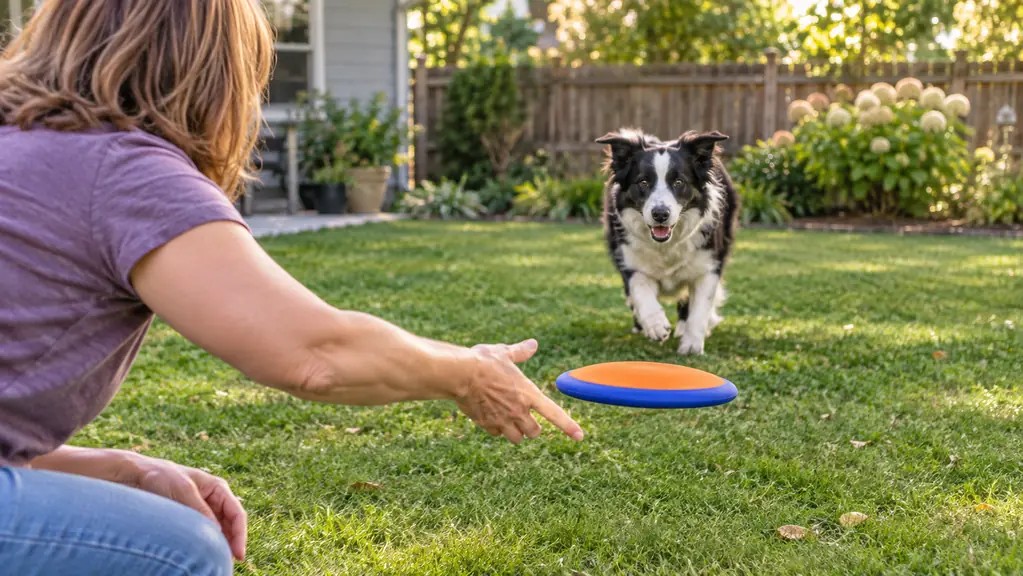
The listing describes a 9.75 inch disc with soft rubber edges and a multilayer nylon interior, sold as a single pack and aimed at medium to large dogs. In my hand it feels like a stiff fabric ring around a rubber rim, light enough that a wrist flick sends it further than I expect the first few times. It is not a hard plastic disc. That soft rim is the entire reason I was willing to throw one at my own dog in the first place.
The listing also says it floats and calls it waterproof. Juno has never had it anywhere near water, so I can only repeat that as a listing fact and not as something I watched with my own eyes. Everything else in this review comes from my own yard. I am careful about that line because I read plenty of reviews that blend the two together, and I would rather tell you what I actually saw.
It is not a chew toy. I pick it up at the end of every game and it goes back on the shelf. After a year, Juno has left small tooth marks along the edge from grabbing it out of the air, which is what a soft rim does when a dog takes it at a run. The rest of the disc is intact. No tear, no split, and no wobble in flight that I can notice.
The Slow Start: Two Weeks of Rolling Before Any Catching
Juno did not care about the disc at first, and I want to be straight about that because a lot of reviews skip the boring part. For the first two weeks I rolled it along the grass instead of throwing it. A rolling disc is a low, moving thing at ground level, and ground level is where she was already comfortable. It was not exciting. It was a start, and it took patience I did not know I had.
Then came short throws, maybe ten feet, kept flat and low. She started running at those before she started catching them. It took about a month before she was catching most of what I threw, and even now she drops it a few feet short and waits for me to walk over and pick it up myself. She is not a disc dog. She is a dog who likes running after something that flies, and for a hobby handler that is more than enough.
Why I Throw Low and Flat
People at the park throw high and let their dogs leap for it. I do not, and it is not because I think they are doing it wrong. It is the same reason I keep our jumps at the 8.5 inch setting instead of 13. Juno is 28 pounds and about 17 inches at the shoulder. I want clean, easy repetition. Height is not the thing I am practicing for, and I am not going to pretend otherwise.
A flat throw also suits this disc. When I keep my wrist level, it travels straight and low and lands flat, which is an easy thing for a dog to read. When I get under it and throw nose up, it stalls and drops and Juno reads it late. The disc has been reliable. My throwing arm is the part that needs work, and a year of Sundays has not fixed it.
How It Has Held Up After a Year
A year in, the Chuckit! Paraflight still flies the way it did in the first month. The rim has those small tooth marks. The fabric center has a couple of soft spots where it has landed on the slope, and the edge has not started to separate anywhere. It has never been left out overnight and it has never been left with Juno, which I am sure is most of the reason it still looks the way it does.
The one difference I notice now is that it is slightly less stiff than it was. A new one snaps out of the hand a little cleaner. Mine has softened up, and on a calm morning I can still put it roughly where I want it, which is all my throwing accuracy can promise anyway. I will replace it when it stops flying straight. So far it has not stopped.
Mine gets wiped down with a damp cloth when it comes in muddy, which is most Sundays from October through March, and then it goes straight back on the shelf. I do not put it away wet and I do not leave it on the grass. That is about the whole maintenance routine, and it takes less time than filling a water bowl.
Where It Falls Short
The Large is a little big for Juno. She sits at 28 pounds, the bottom of the medium to large range the listing names, and a 9.75 inch disc looks like a dinner plate beside her. She manages it fine, but if I were buying again for a dog her size I would look at a smaller size first. Bigger is not automatically better, and I bought Large simply because the listing pointed that direction.
Wind is the other problem. A light disc is easy to throw and easy to push around. On a breezy morning mine turns over and dives, and after two of those I usually call it and we go inside. And because this is a two person game, it is only ever as good as my willingness to stand outside. On a cold Sunday the disc stays on the shelf and Juno gets an extra walk instead.
The last limitation is me. On weeks when bookkeeping runs late or the weather turns, the disc is the first thing to go. It is not equipment I can set out and leave, the way I can with the jumps or the tunnel. It asks me to be present and throwing for the whole fifteen minutes, and some weeks I do not have that in me.
What I Compared It To
I have never owned a ball launcher. I watched other owners use them at a park, I looked at a couple of listings, and then I did not buy one, because Juno does not chase balls. That is the whole story. A launcher throws a ball further and faster than I can, and none of that matters if the dog has no interest in the ball in the first place.
I do have a rope tug that we use at the end of a training sequence, ten seconds of tug and then it goes back in my hand. The disc is not that. Tug is a reward that follows work. The disc is the work and the reward at the same time, on a different morning, and I like having both for different reasons. If I had to keep only one of them I would keep the tug, because it fits the sessions I actually run most weeks.
What I Liked
- Flies straight and low on a flat throw, which is easy for a dog to read
- Soft rubber edge has held up through a full year of Sunday mornings
- Light enough that a wrist flick carries it further than expected
- Easy to see and track against grass
- Listing says it floats, which matters for anyone with water nearby
Where It Falls Short
- The Large is oversized for a 28 pound dog
- It turns over and dives on a breezy morning
- The soft edge picks up small tooth marks from catching it at a run
- Not a chew toy, so it has to be picked up and stored after every game
- Requires a person throwing, so it is never self exercise
One disc, twelve months of Sunday mornings, and the only wear on it is a row of small tooth marks along the rim.
Who This Is For
This is for the person with a dog who ignores balls. Juno has never chased a tennis ball with any real interest, and for a long time I assumed she was simply not a fetch dog. She was a flying thing dog. The Chuckit! Paraflight settled that in about a week, and I have thrown a disc for her every Sunday since then.
It is also for someone who wants a low key game and not a training project. You do not need a field, a club, or a second person. You need a bit of grass, fifteen minutes, and an arm that can throw reasonably level. If you have been curious about a disc but you are not ready to spend on a whole setup, this is a sensible first one to find out whether your dog cares at all.
And it suits a handler like me, someone who trains a little, at home, for the fun of it, and who is never going to stand on a start line. There is nothing competitive about the way we use it. It is a Sunday morning in a back yard with a dog who is happy to run, and that was the whole goal.
Who Should Skip It
If your dog is a steady chewer, skip it. The soft rim invites grabbing, and a dog who likes to settle down and work at a toy will get through it faster than you would like. This is a fetch toy, not a chew, and it has to come back inside when the game ends. If that sounds like a hassle you will not keep up with, it will be a hassle.
If you want big air and leaping catches, this is not the disc for that job, at least not the way I throw it. I would also skip the Large for a dog well under Juno's weight and go smaller. There is nothing wrong with the disc itself. It is just sized for dogs at the top of her range and above, and buying oversized for a small dog helps nobody.
If your dog watches a ball land and then walks away, try this instead
One disc, fifteen minutes on a Sunday, and a dog who finally runs. It has lasted a year on my shed shelf and it goes out again next week.
Amazon Check Today's Price on Amazon →